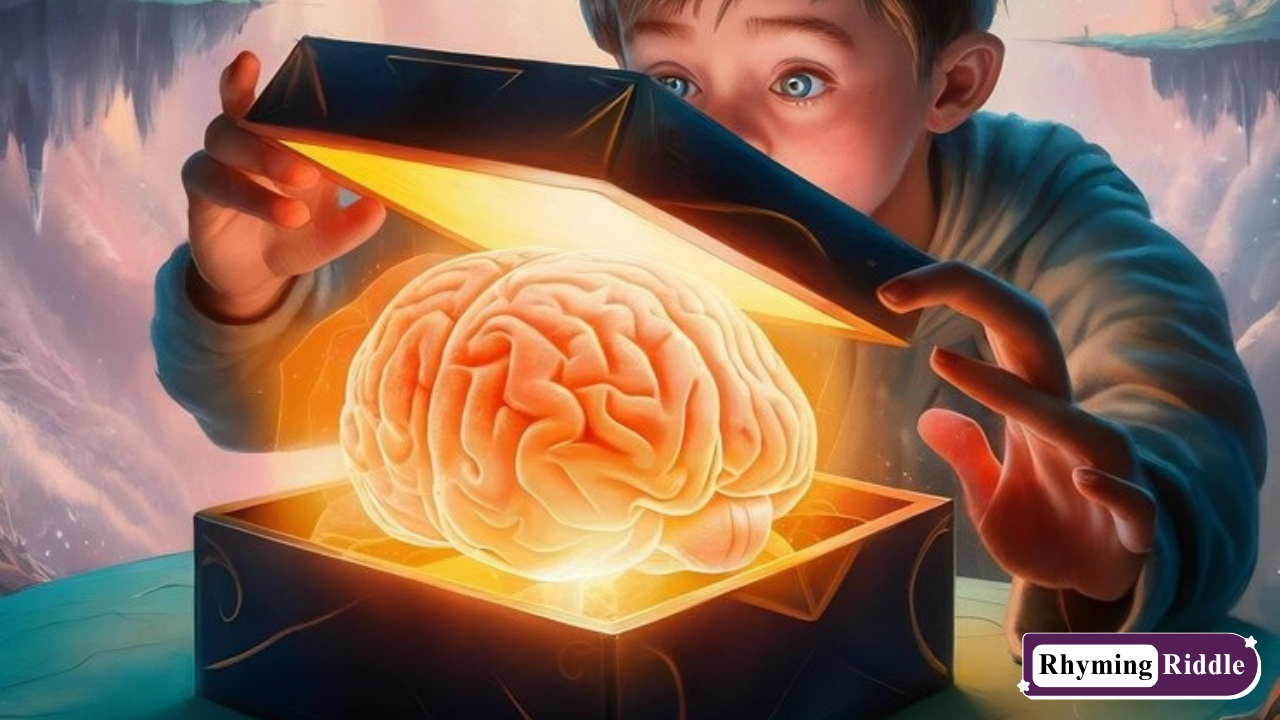
Brain Teasing Rhyming Riddles are a fun way to challenge your mind while enjoying playful words and clever clues. Each riddle creates a small mystery through rhyme, giving you just enough information to search for the hidden answer.
These riddles are great for children, teens, adults, families, teachers, and anyone who enjoys solving word puzzles. Some answers may appear obvious, while others require careful thinking and a fresh point of view.
Whether you need a classroom brain break, a family game, a party activity, or a personal mental challenge, these Brain Teasing Rhyming Riddles offer something entertaining for every age.
Brain Teasing Rhyming Riddles for All Ages
Easy Brain Teasing Rhyming Riddles
- Riddle: I shine above when day is bright,
Then disappear throughout the night.
What am I?
Answer: Sun - Riddle: I have two hands but cannot clap,
I tell the time without a map.
What am I?
Answer: Clock - Riddle: I have many pages you can turn,
Open me up and you can learn.
What am I?
Answer: Book - Riddle: I fall from clouds and wet the ground,
On roofs and windows I make a sound.
What am I?
Answer: Rain - Riddle: I have four legs but cannot run,
You sit on me when work is done.
What am I?
Answer: Chair - Riddle: I glow at night but have no flame,
I change my shape but keep my name.
What am I?
Answer: Moon - Riddle: I have a face but cannot smile,
I hang on walls for quite a while.
What am I?
Answer: Clock - Riddle: I am full of keys but lack a door,
Play my notes and ask for more.
What am I?
Answer: Piano - Riddle: I grow underground, orange and sweet,
Rabbits think I am a tasty treat.
What am I?
Answer: Carrot - Riddle: I have a tail and fly up high,
A string keeps me within the sky.
What am I?
Answer: Kite
Funny Brain Teasing Rhyming Riddles
- Riddle: I sit in your kitchen, cold inside,
Open my door and snacks will hide.
What am I?
Answer: Refrigerator - Riddle: I wake you early with a noisy call,
You press my button and ignore it all.
What am I?
Answer: Alarm Clock - Riddle: I am round and cheesy, cut with care,
At every party I disappear.
What am I?
Answer: Pizza - Riddle: I follow you closely from room to room,
Especially when you carry food on a spoon.
What am I?
Answer: Dog - Riddle: I have many teeth but never chew,
I fix messy hair for me and you.
What am I?
Answer: Comb - Riddle: I sit on your nose and help you see,
Yet sometimes you search while wearing me.
What am I?
Answer: Glasses - Riddle: I am eaten at breakfast, round and sweet,
With one small hole that you cannot eat.
What am I?
Answer: Doughnut - Riddle: I become wetter while making you dry,
I hang in the bathroom nearby.
What am I?
Answer: Towel - Riddle: I am opened wide when food comes near,
Then closed again when it disappears.
What am I?
Answer: Mouth - Riddle: I have four wheels and carry your food,
Push me through stores in a shopping mood.
What am I?
Answer: Shopping Cart
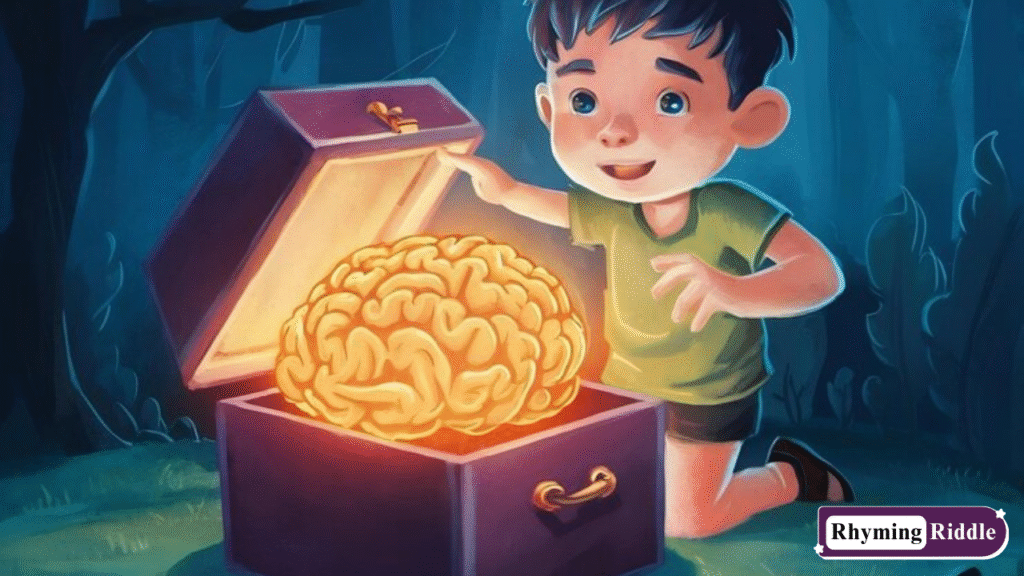
Tricky Brain Teasing Rhyming Riddles
- Riddle: The more you remove, the larger I grow,
Dig in the earth and soon you will know.
What am I?
Answer: Hole - Riddle: I speak without lips and answer your call,
My voice returns from a mountain wall.
What am I?
Answer: Echo - Riddle: I follow your steps in sunshine and light,
Yet disappear in the darkest night.
What am I?
Answer: Shadow - Riddle: I can travel the world while staying in place,
Stuck in a corner with a tiny face.
What am I?
Answer: Stamp - Riddle: I have no beginning, middle, or end,
Around and around my edges bend.
What am I?
Answer: Circle - Riddle: I become shorter as I grow old,
Giving warm light with a flame of gold.
What am I?
Answer: Candle - Riddle: I belong to you, simple and true,
Yet other people use me more than you.
What am I?
Answer: Name - Riddle: I can be broken without a sound,
Trust and friendship keep me around.
What am I?
Answer: Promise - Riddle: I am lighter than air but hard to hold,
Keep me too long and your face may fold.
What am I?
Answer: Breath - Riddle: I have cities but no people in sight,
Roads without cars and rivers held tight.
What am I?
Answer: Map
Brain Teasing Rhyming Riddles for Kids
- Riddle: I am yellow and curved with a peel,
Monkeys enjoy me as part of a meal.
What am I?
Answer: Banana - Riddle: I jump in ponds and sit on a log,
I start as a tadpole and grow to a frog.
What am I?
Answer: Frog - Riddle: I carry my house wherever I go,
Moving across the ground very slow.
What am I?
Answer: Snail - Riddle: I buzz through gardens from flower to flower,
Making sweet honey hour after hour.
What am I?
Answer: Bee - Riddle: I have a trunk but store no clothes,
I have giant ears and a very long nose.
What am I?
Answer: Elephant - Riddle: I am white and fluffy and float in the sky,
Sometimes I bring rain as I travel by.
What am I?
Answer: Cloud - Riddle: I have eight arms and live in the sea,
Hiding in rocks is easy for me.
What am I?
Answer: Octopus - Riddle: I have black and white stripes from tail to head,
Across grassy plains I quickly tread.
What am I?
Answer: Zebra - Riddle: I spin a web both sticky and thin,
Waiting for tiny flies to come in.
What am I?
Answer: Spider - Riddle: I open my petals when morning is bright,
Then rest in the garden throughout the night.
What am I?
Answer: Flower
Brain Teasing Rhyming Riddles for Adults
- Riddle: I can fill a room but take no space,
I vanish when darkness enters the place.
What am I?
Answer: Light - Riddle: I arrive every moment but never can stay,
Once I have passed, I have faded away.
What am I?
Answer: Time - Riddle: You may gain me slowly and lose me fast,
One dishonest choice can make me the past.
What am I?
Answer: Trust - Riddle: I have no weight but can feel hard to bear,
Speak me aloud and I vanish in air.
What am I?
Answer: Secret - Riddle: I grow when I eat but die when I drink,
I glow with heat much faster than you think.
What am I?
Answer: Fire - Riddle: I am bought for eating but never consumed,
After every meal I am cleared from the room.
What am I?
Answer: Plate - Riddle: I can build a future or ruin a plan,
Once I am spoken, return me no one can.
What am I?
Answer: Word - Riddle: I begin with hope and finish with gain,
I require steady effort through struggle and pain.
What am I?
Answer: Success - Riddle: I can open a heart without any key,
I cost you nothing when given freely.
What am I?
Answer: Kindness - Riddle: I stay in the past but live in your mind,
Some bring you comfort while others are unkind.
What am I?
Answer: Memory
Logic Rhyming Riddles
- Riddle: Two fathers and sons went out for a bite,
Three meals were ordered and portions were right.
How many people were there?
Answer: Three - Riddle: I am an odd number, remove one small letter,
I suddenly become even and fit much better.
What number am I?
Answer: Seven - Riddle: I can go up but never come down,
Each birthday adds more as years turn around.
What am I?
Answer: Age - Riddle: A farmer owns sheep, seventeen in sight,
All but nine leave before the night.
How many remain?
Answer: Nine - Riddle: I come once in a minute and twice in a moment,
But never in a thousand years as a component.
What am I?
Answer: The Letter M - Riddle: Before people found the highest mountain peak,
Which mountain was tallest, the answer you seek?
Answer: Mount Everest - Riddle: I have twelve faces but no eyes at all,
I tell you the months as seasons call.
What am I?
Answer: Calendar - Riddle: Five birds were sitting upon a tree,
A loud sound came and they started to flee.
How many were left?
Answer: None - Riddle: You pass the runner who sits in place two,
Which position now belongs to you?
Answer: Second Place - Riddle: A house has four walls facing south in the snow,
A bear walks nearby with a bright white glow.
What color is the bear?
Answer: White
Clever Wordplay Rhyming Riddles
- Riddle: I begin with T and finish with T,
With plenty of tea in the middle of me.
What am I?
Answer: Teapot - Riddle: I start with E and contain one letter,
I carry your message and make writing better.
What am I?
Answer: Envelope - Riddle: I have words but I never speak,
Open my pages for facts you seek.
What am I?
Answer: Dictionary - Riddle: I begin with P and end with E,
Holding thousands of letters inside of me.
What am I?
Answer: Post Office - Riddle: Read me forward and I am quite heavy,
Read me backward and I clearly say no.
What am I?
Answer: Ton - Riddle: Add two letters and fewer I become,
This strange little word can puzzle someone.
What word am I?
Answer: Few - Riddle: I appear in water but never get wet,
Look down below and we may have met.
What am I?
Answer: Reflection - Riddle: I am found in a sock but never a shoe,
I appear once in rock and twice in cuckoo.
What am I?
Answer: The Letter K - Riddle: I appear at the end of rainbows in view,
Yet never at the beginning, that is your clue.
What am I?
Answer: The Letter S - Riddle: I start with a question and finish with why,
Read me carefully before you reply.
What am I?
Answer: Inquiry
Everyday Object Rhyming Riddles
- Riddle: I have a handle and open a room,
Turn me gently and enter soon.
What am I?
Answer: Door - Riddle: I hold hot drinks but cannot taste,
Pick me up by my handle with haste.
What am I?
Answer: Cup - Riddle: I clean the floor and have a long head,
I sleep in a cupboard instead of a bed.
What am I?
Answer: Broom - Riddle: I have many bristles standing in rows,
Across your teeth each morning I go.
What am I?
Answer: Toothbrush - Riddle: I show your face but do not speak,
Look into me whenever you seek.
What am I?
Answer: Mirror - Riddle: I keep your clothes safe behind a door,
With shelves and hangers from top to floor.
What am I?
Answer: Wardrobe - Riddle: I shine in darkness beside your bed,
Switch me off before resting your head.
What am I?
Answer: Lamp - Riddle: I have soft cushions and space for three,
Sit in the living room upon me.
What am I?
Answer: Sofa - Riddle: I wash your clothes by spinning around,
Soap and water make a bubbling sound.
What am I?
Answer: Washing Machine - Riddle: I keep food hot but have no fire,
Press a few buttons for the heat you require.
What am I?
Answer: Microwave
Nature Brain Teasing Rhyming Riddles
- Riddle: I stand very tall with branches spread,
Green leaves grow above my head.
What am I?
Answer: Tree - Riddle: I flow through valleys toward the sea,
Fish and stones may live in me.
What am I?
Answer: River - Riddle: I am a giant of rock and stone,
My snowy peak may stand alone.
What am I?
Answer: Mountain - Riddle: I move through trees but cannot be seen,
I cool the air and keep it clean.
What am I?
Answer: Wind - Riddle: I flash through clouds before thunder is heard,
A bright crooked line without a word.
What am I?
Answer: Lightning - Riddle: I stretch across the sky after rain,
With seven bright colors in my chain.
What am I?
Answer: Rainbow - Riddle: I cover the ground with tiny grains,
Beside the ocean my kingdom remains.
What am I?
Answer: Sand - Riddle: I grow in forests, soft and green,
On rocks and trees I can be seen.
What am I?
Answer: Moss - Riddle: I fall in winter, soft and white,
Covering rooftops throughout the night.
What am I?
Answer: Snow - Riddle: I rise and fall beside the shore,
Pulled by the moon forevermore.
What am I?
Answer: Tide
Number Rhyming Riddles
- Riddle: I come after one and before three,
A pair of shoes is made of me.
What number am I?
Answer: Two - Riddle: I have no value when standing alone,
Place me after one and ten is shown.
What number am I?
Answer: Zero - Riddle: I am the fingers on one small hand,
Count them carefully where you stand.
What number am I?
Answer: Five - Riddle: I am the days that fill one week,
Count from Monday for the answer you seek.
What number am I?
Answer: Seven - Riddle: I am the months within one year,
Count every season and I appear.
What number am I?
Answer: Twelve - Riddle: I am twice four and half sixteen,
In simple sums I often am seen.
What number am I?
Answer: Eight - Riddle: I look like a circle standing straight,
Turn me sideways and infinity awaits.
What number am I?
Answer: Eight - Riddle: I am one more than nine in line,
With two small digits I look just fine.
What number am I?
Answer: Ten - Riddle: I am three groups of three in play,
Add them together without delay.
What number am I?
Answer: Nine - Riddle: I am half of ten and one more than four,
Count me correctly and ask no more.
What number am I?
Answer: Five
What Am I Rhyming Riddles
- Riddle: I fly without wings and cry without eyes,
Wherever I travel, darkness may rise.
What am I?
Answer: Cloud - Riddle: I run but never walk through land,
With a mouth but no voice and a bed without sand.
What am I?
Answer: River - Riddle: I have one eye but cannot see,
Thread passes through the middle of me.
What am I?
Answer: Needle - Riddle: I have a neck but lack a head,
I may hold water beside your bed.
What am I?
Answer: Bottle - Riddle: I have a thumb and fingers four,
Yet I am not alive anymore.
What am I?
Answer: Glove - Riddle: I have a ring but no golden band,
Pick me up and speak where you stand.
What am I?
Answer: Telephone - Riddle: I have branches but no fruit or tree,
People keep their money inside of me.
What am I?
Answer: Bank - Riddle: I have a tongue but never talk,
I travel with you when you walk.
What am I?
Answer: Shoe - Riddle: I have an eye but cannot blink,
Winds turn around me faster than you think.
What am I?
Answer: Hurricane - Riddle: I have many rings but wear no gold,
My age through every ring is told.
What am I?
Answer: Tree
Short Brain Teasing Rhyming Riddles
- Riddle: I am full of holes but water I hold.
What am I, both useful and old?
Answer: Sponge - Riddle: I go up when rain comes down.
What am I opened around the town?
Answer: Umbrella - Riddle: I am black when clean and white when used.
What am I that leaves students confused?
Answer: Blackboard - Riddle: I have legs but never roam.
What am I inside your home?
Answer: Table - Riddle: I am tall when young and short when old.
What am I with a flame of gold?
Answer: Candle - Riddle: I have ears but cannot hear.
What am I that grows each year?
Answer: Corn - Riddle: I have a bark but never bite.
What am I growing tall in light?
Answer: Tree - Riddle: I have teeth but cannot eat.
What am I that makes hair neat?
Answer: Comb - Riddle: I am caught but never thrown.
What am I that makes you groan?
Answer: Cold - Riddle: I can be cracked, made, told, and played.
What am I from laughter made?
Answer: Joke
Hard Brain Teasing Rhyming Riddles
- Riddle: I have no voice but stories I keep,
Of people who lived before your sleep.
Dust may cover every page,
Yet I carry knowledge from age to age.
What am I?
Answer: History Book - Riddle: I am not alive but constantly grow,
Add more information and more I will know.
I answer your questions without a face,
Yet I may be stored in a digital place.
What am I?
Answer: Database - Riddle: I connect two people without a string,
Through thoughts and words understanding I bring.
I can grow stronger when both people care,
Yet disappear when trust is not there.
What am I?
Answer: Communication - Riddle: I cannot be touched but influence choice,
I may arrive as a quiet inner voice.
Experience shapes me year after year,
Helping wise answers become more clear.
What am I?
Answer: Judgment - Riddle: I have no body but live in the mind,
I create new worlds of every kind.
Writers and artists depend upon me,
Through thought and wonder I set ideas free.
What am I?
Answer: Imagination - Riddle: I move through nations without taking a flight,
I change every morning and sometimes at night.
People may earn me, save me, or spend,
My value can rise and fall without end.
What am I?
Answer: Money - Riddle: I can be given but never returned,
I may be respected, requested, or earned.
I disappear when rules are ignored,
Yet grow when honest actions are stored.
What am I?
Answer: Respect - Riddle: I am always ahead but never in sight,
You plan for me morning, afternoon, and night.
Each passing second brings me near,
Yet when I arrive, I disappear.
What am I?
Answer: Future - Riddle: I can start with one person and travel around,
Changing slightly whenever retold in sound.
I may damage trust though I may not be true,
Think before sharing what reaches you.
What am I?
Answer: Rumor - Riddle: I am measured in moments but cannot be weighed,
I cannot be borrowed, stored, or delayed.
Everyone receives me throughout every day,
Yet once I am gone, I will not stay.
What am I?
Answer: Time
What Are Brain Teasing Rhyming Riddles?
Brain Teasing Rhyming Riddles are word puzzles written with clues that follow a rhyming pattern. Each puzzle describes an object, animal, idea, number, place, or action without directly naming it.
The reader must study the clues, consider different possibilities, and choose the answer that fits every line.
A simple riddle may describe a common object such as a clock or pencil. A difficult riddle may describe an abstract idea such as time, memory, trust, or imagination.
Rhyming adds an extra creative element. The writer must provide useful clues while choosing words that sound natural together.
Understanding the Rhyming Structure
A rhyme happens when words share similar ending sounds.
Words such as light, night, bright, and sight rhyme because their endings sound alike. Riddle writers often place these words at the ends of lines to create a smooth rhythm.
The rhyme does not need to be complicated. Two clear lines can create a complete riddle:
Riddle: I have many teeth but cannot eat,
I move through your hair to make it neat.
Answer: Comb
Longer riddles can include four or five lines when the answer requires more clues.
The strongest riddles balance sound and meaning. The lines should rhyme, but they must also guide the reader toward a logical answer.
Why Brain Teasing Rhyming Riddles Are Popular
These riddles combine poetry, mystery, and problem solving in one short activity.
Children enjoy guessing familiar animals and objects. Adults may prefer riddles with hidden meanings, logic traps, or abstract answers.
They are also easy to share. You can read them aloud, write them on a board, send them in a message, or use them as clues during a game.
Rhyming activities can support awareness of spoken sound patterns. Reading Rockets explains that recognizing rhyme units is an important part of developing phonological awareness, especially when rhyme recognition is paired with enjoyable activities.
Benefits of Brain Teasing Rhyming Riddles
Brain Teasing Rhyming Riddles can add entertainment to learning and social activities.
Encourages careful thinking
A reader must consider every clue rather than choosing the first answer that comes to mind.
This encourages patience and attention.
Builds vocabulary
Riddles introduce descriptive words in a memorable context.
When readers understand how each word connects to the answer, new vocabulary becomes easier to remember.
Supports creative thinking
Some clues require readers to look at familiar objects in unusual ways.
A clock may have hands but cannot clap. A river may run without having legs. These descriptions encourage flexible thinking.
Creates social interaction
Riddles are easy to solve with friends, classmates, or family members.
People can compare guesses, explain their reasoning, and laugh at unexpected answers.
Makes quiet time enjoyable
A collection of riddles can provide screen free entertainment during travel, classroom breaks, family gatherings, or rainy afternoons.
How to Use Brain Teasing Rhyming Riddles in Different Situations
These riddles can be used in many places because they require little preparation.
In the classroom
Teachers can begin a lesson with one short riddle.
Students can write their answers, discuss the clues, or identify the words that rhyme.
At family gatherings
Choose riddles for different age levels.
Give younger children easy animal riddles while adults solve more difficult logic and wordplay puzzles.
During parties
Turn the riddles into a friendly competition.
Read each puzzle aloud and award one point to the first person or team with the correct answer.
On road trips
Riddles provide simple entertainment without equipment.
One passenger can read the clues while everyone else guesses.
During outdoor games
Riddles can guide players from one place to another. A clue may describe a tree, gate, garden bench, or flower pot.
For a larger adventure, these outdoor treasure hunt riddles for children and adults show how rhyming clues can turn familiar outdoor spaces into an exciting search.
When to Keep Rhyming Riddles Short
Not every riddle needs four or five lines.
Short riddles are often better for young children, quick games, and spoken activities.
For young children
Use familiar answers and direct clues.
Example:
Riddle: I buzz near flowers all day with glee.
What small insect could I be?
Answer: Bee
For quick brain breaks
A two line riddle can refresh attention without interrupting the main activity.
For group competitions
Short clues keep the game moving.
Players can answer quickly before the next riddle begins.
For social media posts
A short riddle is easier to read on a small screen.
The answer can be placed below the post or revealed later.
For beginners
Simple language helps new riddle solvers understand how clues work.
Once they become more confident, you can introduce longer puzzles with less obvious answers.
When to Add More Personality
Riddles become more memorable when they contain humor, storytelling, or a surprising point of view.
Use the object’s voice
Let the answer describe itself.
Example:
Riddle: I sit by your bed and shine every night,
Switch me on when you need some light.
Answer: Lamp
Create a tiny story
A riddle can describe an event rather than only listing features.
For example, a missing gift might be hidden behind a series of clues that lead through different rooms.
These gift scavenger hunt rhyming riddles are useful examples of how a simple present can become the final reward in a playful clue trail.
Add gentle humor
Funny riddles can describe normal objects in silly ways.
A refrigerator may guard snacks, while an alarm clock may be blamed for ruining every morning.
Use a theme
Build a complete collection around money, animals, school, food, nature, or holidays.
Readers who enjoy number and currency clues can explore these tricky money rhyming riddles for puzzles involving coins, notes, saving, spending, and value.
How to Create Brain Teasing Rhyming Riddles
Writing your own riddles can be just as enjoyable as solving them.
Choose the answer first
Start with one clear word.
It may be an object, animal, place, number, feeling, or idea.
List its main features
Think about appearance, purpose, location, sound, movement, and unusual qualities.
For a clock, you might list hands, numbers, ticking, walls, and time.
Hide the obvious name
Describe the answer without using the word itself.
The clues should guide readers without revealing too much.
Choose natural rhyming words
Look for words connected to the answer.
If the answer is light, useful rhymes may include night, bright, and sight.
Create two or four lines
Short riddles are easier to write.
You can add extra lines when the answer needs more detail.
Read the riddle aloud
Listen to the rhythm.
Remove unnecessary words and change any rhyme that sounds forced.
Test it on someone
Ask another person to solve the riddle.
If the answer feels impossible, add a clue. If it is guessed immediately, make one clue less direct.
Brain Teasing Riddles for Different Age Groups
The difficulty should match the people solving the riddles.
For young children
Use familiar animals, food, toys, colors, and household objects.
Keep the clues short and clear.
For school age children
Add simple wordplay, number clues, and objects with unusual features.
Encourage children to explain why their answer fits.
For teenagers
Use trick questions, logic, hidden letters, and double meanings.
The answer should require more than simple recognition.
For adults
Include abstract ideas, detailed logic, and clues that can initially point toward several possible answers.
Adults often enjoy riddles that require discussion before the solution becomes clear.
For mixed age groups
Begin with easy riddles and gradually increase the difficulty.
This gives everyone a chance to participate.
Common Mistakes to Avoid
A riddle should be challenging, but it should still feel fair.
Forcing the rhyme
Do not add a confusing clue only because its final word rhymes.
Meaning should always come before decoration.
Using clues that fit many answers
A clue such as “I am large and strong” could describe many things.
Add specific details that lead toward one clear solution.
Giving away the answer
Avoid using the answer or an obvious form of it inside the riddle.
Let the solver make the final connection.
Making every riddle too easy
A complete collection needs variety.
Mix direct clues with trickier puzzles to keep readers interested.
Making every riddle too hard
Constantly difficult riddles can become frustrating.
Include a few simple answers so readers can build confidence.
Using vocabulary that does not match the audience
Young children may not understand advanced descriptions.
Choose language that feels natural for the intended age group.
Ignoring the rhythm
A riddle may contain rhyming words but still sound awkward.
Reading it aloud helps you identify lines that are too long or uneven.
Real Life Riddle Activities
Brain Teasing Rhyming Riddles can become part of practical games and learning activities.
Scenario one
A teacher writes one riddle on the board before class.
Students submit guesses during morning attendance and discuss the answer together.
Scenario two
A parent reads animal riddles during a family road trip.
Each correct answer earns one point, and the winner chooses the next snack stop.
Scenario three
Friends use hard riddles during a game night.
Players receive extra points when they can explain every clue.
Scenario four
A party host hides clues around the house.
Each answer reveals the location of the next riddle until players find a small prize.
Scenario five
A teacher removes the answers from ten riddles.
Students solve them first and then write a new rhyming line for each puzzle.
Scenario six
Family members create original riddles about one another’s favorite objects.
Everyone guesses both the answer and the person who wrote the clue.
Tips for Solving Hard Rhyming Riddles
Difficult riddles often become easier when you slow down and study their structure.
Read every line twice
The first line may create one idea, while a later clue changes the meaning.
Look for words with two meanings
Words such as bank, ring, bark, and key can describe several different things.
The riddle may depend on the less obvious meaning.
Notice what the answer cannot do
A riddle may say an object has hands but cannot clap.
That contradiction is often the most important clue.
Avoid taking every line literally
Riddles use imagination.
A river can run, a clock can have a face, and a shoe can have a tongue.
Consider abstract answers
Not every answer is a physical object.
Time, trust, memory, silence, and knowledge are common riddle solutions.
Discuss your reasoning
Another person may understand a clue differently.
Sharing ideas can reveal an answer that neither person noticed alone.
The Lasting Appeal of Brain Teasing Rhyming Riddles
Rhyming riddles remain enjoyable because they combine several kinds of fun in one short puzzle.
They create curiosity, encourage conversation, and reward careful thinking. The rhyme makes the clues pleasant to read, while the hidden answer creates a satisfying moment of discovery.
They are also flexible enough for almost any setting. A riddle can become a classroom warm up, a family challenge, a party game, a treasure hunt clue, or a quiet activity for one person.
Even a very simple puzzle can make a familiar object seem new. That change in perspective is one of the most enjoyable parts of solving Brain Teasing Rhyming Riddles.
Conclusion
Brain Teasing Rhyming Riddles are a creative way to combine language, logic, humor, and imagination. They can challenge children, entertain adults, and bring people together through shared guessing and discussion.
Some riddles are solved in seconds, while others require several careful readings. Easy puzzles build confidence, funny riddles create laughter, and hard riddles encourage deeper thought.
With these 125+ Brain Teasing Rhyming Riddles for All Ages, you now have ideas for classrooms, road trips, family gatherings, parties, competitions, treasure hunts, and quiet puzzle time. Choose riddles that match your audience and allow everyone enough time to think.
The best riddles do not simply hide an answer. They make the final answer feel clever, surprising, and satisfying.
FAQs
What are Brain Teasing Rhyming Riddles?
Brain Teasing Rhyming Riddles are short puzzles that use poetic clues and similar ending sounds. The reader must connect the clues and guess the hidden answer.
Are rhyming riddles suitable for children?
Yes, children can enjoy riddles with familiar answers, simple vocabulary, and clear clues. More difficult wordplay can be introduced as their confidence grows.
How can teachers use rhyming riddles?
Teachers can use them as classroom warm ups, reading exercises, vocabulary activities, or group competitions. Students can also create their own riddles as a writing task.
What makes a rhyming riddle difficult?
Hard riddles often use double meanings, abstract answers, hidden letters, or misleading clues. They require the solver to consider several possibilities before choosing an answer.
How do I write my own rhyming riddle?
Choose the answer first, list its main features, and turn those features into short rhyming clues. Hide the answer and test the finished riddle on another person.
Where can Brain Teasing Rhyming Riddles be used?
They can be used at home, in classrooms, during parties, on road trips, in treasure hunts, or as social media challenges. Their simple format makes them easy to adapt.